




Why Rug Size Matters:
A rug is like the ✨magic✨ carpet of a room — it grounds your furniture, adds warmth, and instantly makes your space feel finished. But knowing how to pick the right rug size? That’s where most people get stuck.
It happens all the time: you find a rug online that looks perfect, but when you roll it out, it’s way too small (your sofa legs are hanging off) or way too big (hello, wall-to-wall carpet vibes). The truth is, rug size is one of the most common design mistakes homeowners make.
The good news? Once you know the rules designers use, you’ll never second-guess again. In this guide, I’ll give you two things:
- A quick dose of designer education — so you understand why size and placement matter.
- A room-by-room rug size cheat sheet — so you’ll know exactly what size rug to buy for every space.
- Once you understand both, you’ll be able to confidently shop for rugs that make your home feel balanced, cozy, and pulled together.
Section 1: Rug Education (Foundations Before the Rules)
First, A Little Rug Education (So You Can Shop Like a Designer)
Before we get into the exact rug sizes, let’s talk about the why. Designers don’t just pick rugs that “fit.” We think about proportion, traffic flow, materials, and lifestyle. These details make the difference between a rug that looks “off” and one that makes your room feel polished and intentional.
Topics to Cover Here:
- Scale & proportion (negative space, balance)
- Negative Space
- Traffic flow & zoning
- Pile height & functionality
- Rug shapes and when to use them
- Layering rugs for budget + style
- Orientation matters (long room vs square room)
- Materials & lifestyle (wool vs synthetic, etc.)
- Anchoring furniture
1. Scale & Proportion
When thinking about how to pick the right rug size, it isn’t just about dimensions — it’s also about how they affect how a room feels.
Scale is simply how things relate to each other. A rug that’s too small makes all your furniture look like it’s floating. Too large, and it can feel heavy and more like carpet.
👉 Rule of Thumb: Leave 8–18 inches of bare floor between your rug and the walls. This creates a frame around the rug so it feels grounded without taking over the room.
👉 Pro Tip: When in doubt, go bigger. A slightly oversized rug almost always looks better than one that’s too small.
2. Negative Space
Negative space is just a fancy way of saying: don’t cover the entire floor. If you push a rug right up to the walls, it looks like old-school wall-to-wall carpet. But if the rug is tiny with too much empty floor around it, the space looks awkward.
👉Pro Tips: Think of your rug like art — every piece needs breathing room.
3. Traffic Flow & Zones
Rugs guide how people move through a space. In open-concept homes, rugs define zones: living, dining, office.
👉 Rule of Thumb: Never put the edge of a rug right in the middle of a walkway — people will trip, and the rug will wear unevenly.
👉 Pro Tip: Use rugs to create “invisible walls” in large or open rooms.
4. Pile Height & Functionality
Pile height = how thick a rug is.
- Low Pile (flatweave, jute, indoor/outdoor): Best for dining rooms, offices, or high-traffic areas. Easy to clean, chairs slide smoothly.
- Medium pile: Soft and cozy but still practical — living rooms and bedrooms love these.
- High pile / shag: Luxurious underfoot but hard to clean and not ideal for dining or rolling chairs.
👉 Pro Tip: High traffic = low pile. Cozy retreat = medium or high pile.
5. Rug Shapes
It isn’t just about how to pick the right rug size, rug shape can change the whole mood:
- Rectangle: Classic, works everywhere.
- Round: Great under round dining tables, in small square spaces, nurseries, playrooms.
- Runner: Long and narrow, perfect for hallways, kitchens, or next to beds.
- Square: Ideal in square rooms but can feel awkward in long spaces.
👉 Pro Tip: If your room already has a lot of straight lines, try a round rug to soften the look.
6. Layering Rugs + Budget-Friendly Tip
Layering is a designer trick that solves two problems: size and style. Place a smaller, patterned rug over a large, neutral base (like jute). The base rug gives you scale, the top rug adds personality.
👉 Pro Tip: Base rug should be 12–18 inches larger than the decorative rug on all sides.
7. Orientation Matters
Your rug should follow the layout of your furniture or the shape of your room. In long rooms, run the rug lengthwise. In bedrooms, place the rug horizontally under the bed so it extends beyond the sides.
👉 Pro Tip: Always align rugs with furniture groupings, not just the walls.
8. Material & Lifestyle
- Wool: Durable, natural, stain-resistant, and long-lasting.
- Cotton: Lightweight, affordable, and easy to clean.
- Synthetics (polypropylene, PET): Affordable, pet/kid friendly, often washable, outdoor/indoor use.
- Jute / Sisal: Beautiful texture, durable, but not super soft.
- Washable Rugs: Perfect for entryways, dining, kids’ spaces.
👉 Pro Tip: Match your rug to your life. Pets and spills? Go synthetic or washable. Want an investment piece? Choose wool.
9. Anchoring Furniture
One of the biggest mistakes I see: furniture floating around a too-small rug. Rugs are meant to anchor furniture groupings and make the room feel unified.
👉 Rule of Thumb: In living rooms, at least the front legs of sofas and chairs should be on the rug. In bedrooms, the bed should overlap the rug so it frames the space.
Now that you know the foundations, let’s go room by room so you’ll know the exact rug size to buy in every situation
Section 2: The Room-by-Room Rug Size Cheat Sheet
Room by Room: The Exact Rug Sizes You Need
This is where the rules get practical. No more guessing — here’s exactly how to pick the right rug size for in your living room, dining room, bedroom, and beyond.
Subsections (with diagrams/images):
- Bedroom
- Living Room
- Dining Room
- Entryway
- Hallway
- Office
- (Optional) Kids/Nursery
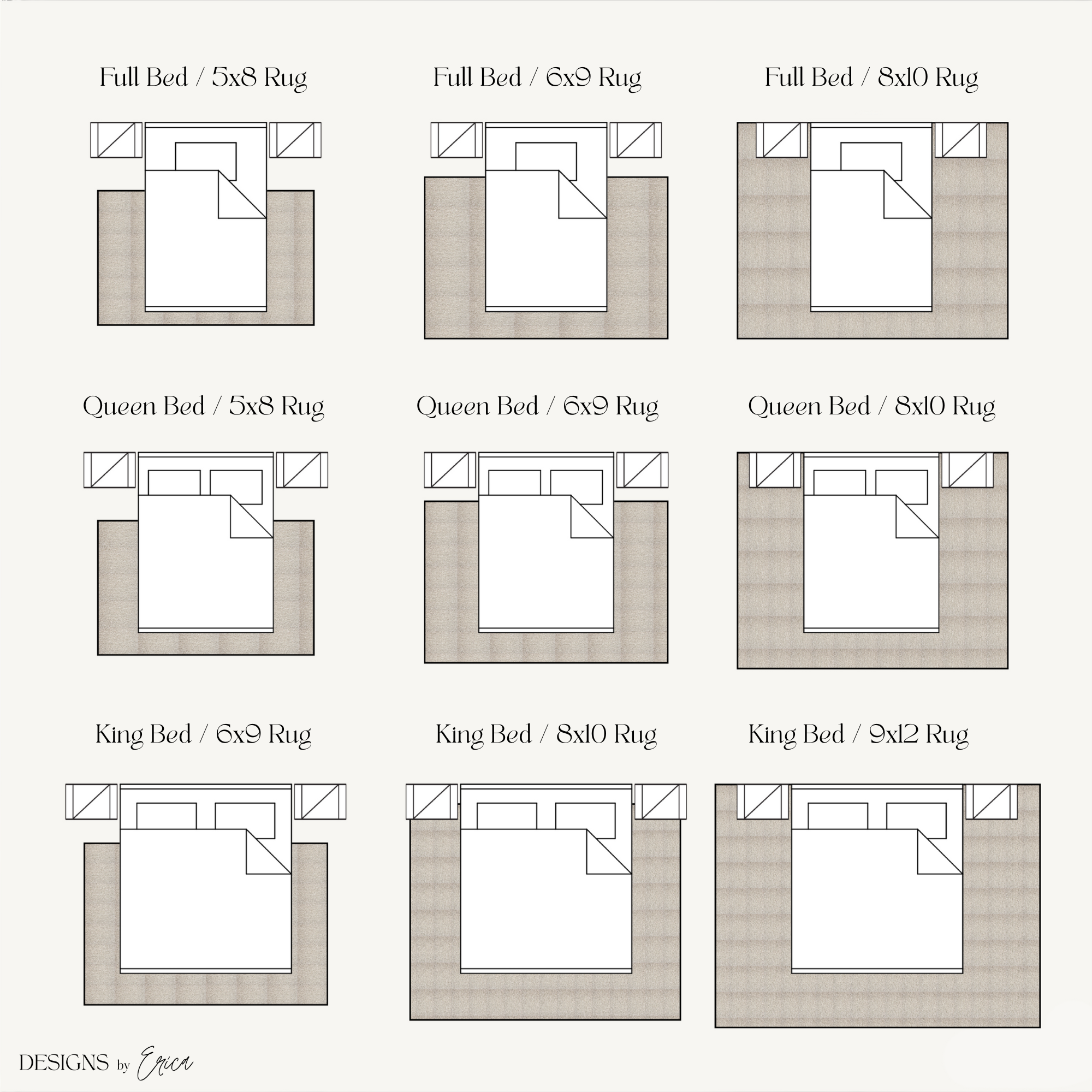
Bedroom Rug Sizes: Framing Your Retreat
In bedrooms, rugs should frame your bed beautifully while giving your feet a soft landing in the morning.
- Golden Rule: Leave at least 18–24 inches showing on each side.
- Sizes to Look For:
- Full Bed→ 6×9 or 8×10
- Queen bed → 8×10 or 6×9
- King bed → 9×12 or 8×10.
👉 Pro Tips:
- You don’t have to run the rug all the way up to the nightstands — start your rug about ⅓ of the way down from the head of the bed
- Runners work great in tight bedrooms where a large rug would overwhelm the space.
- Layering a cowhide or accent rug at an angle adds personality without breaking the sizing rules.
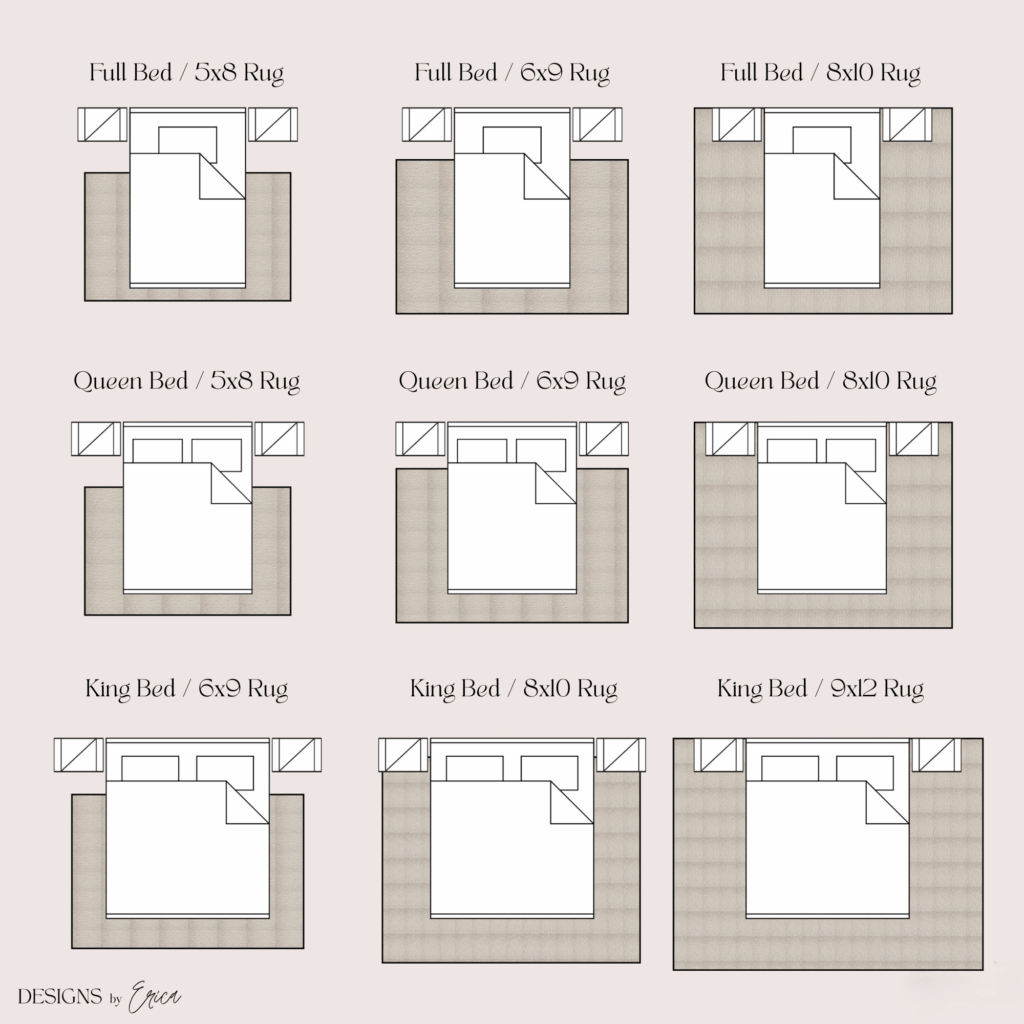
INFOGRAPHIC: In the infographic below, I included an example with a smaller rug so you can see how it compares to the better-sized options for each bed. The infographics are drawn to scale, and the nightstands are 23 inches wide by 16 inches deep.
Living Room Rug Sizes: Grounding the Heart of Your Home
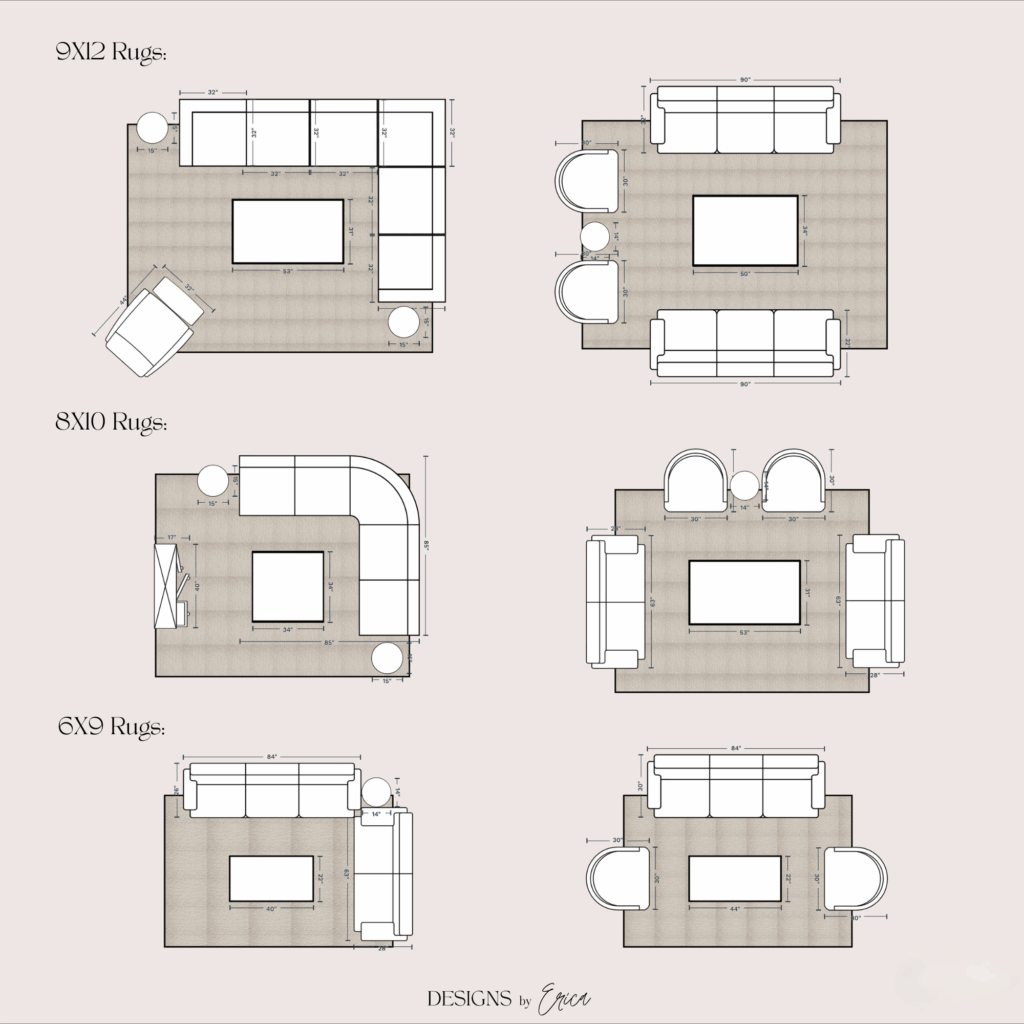
The living room is usually the largest gathering space in a home, and your rug needs to anchor the seating area.
- Golden Rule: The rug should connect your main seating pieces (sofa, chairs, loveseat) and define the “zone.”
- Best Practice: All furniture legs on the rug, or at least the front two legs of each main piece.
- Sizes to Look For:
- Small living rooms → 6×9 (only front legs on rug).
- Medium → 8×10 (front legs or all legs on rug).
- Large/open concept → 9×12+ (all legs comfortably on rug).
Walking Clearances:
- Leave 30–36 inches of walkway behind seating for easy flow.
- Between coffee table and sofa: 16–18 inches is ideal for legroom and balance.
- Between accent chairs: aim for 24–30 inches so traffic feels comfortable.
👉 Pro Tips:
- If your rug floats in the middle of the floor with no furniture touching it, it’s too small.
- Err on the larger side — it makes a room feel expansive, not crowded.
- If you can’t find a large enough rug within budget, layer a smaller decorative rug over a larger natural fiber one (like jute or sisal).
INFOGRAPHIC: When it comes to living rooms, there are a million ways to arrange your furniture and endless variations in furniture size. These layouts are just visual examples to help you see how rug placement changes the look and balance of a space. I also included the furniture dimensions on the image so you can get a realistic sense of scale.
Dining Room Rug Sizes: Space for the Pull-Out
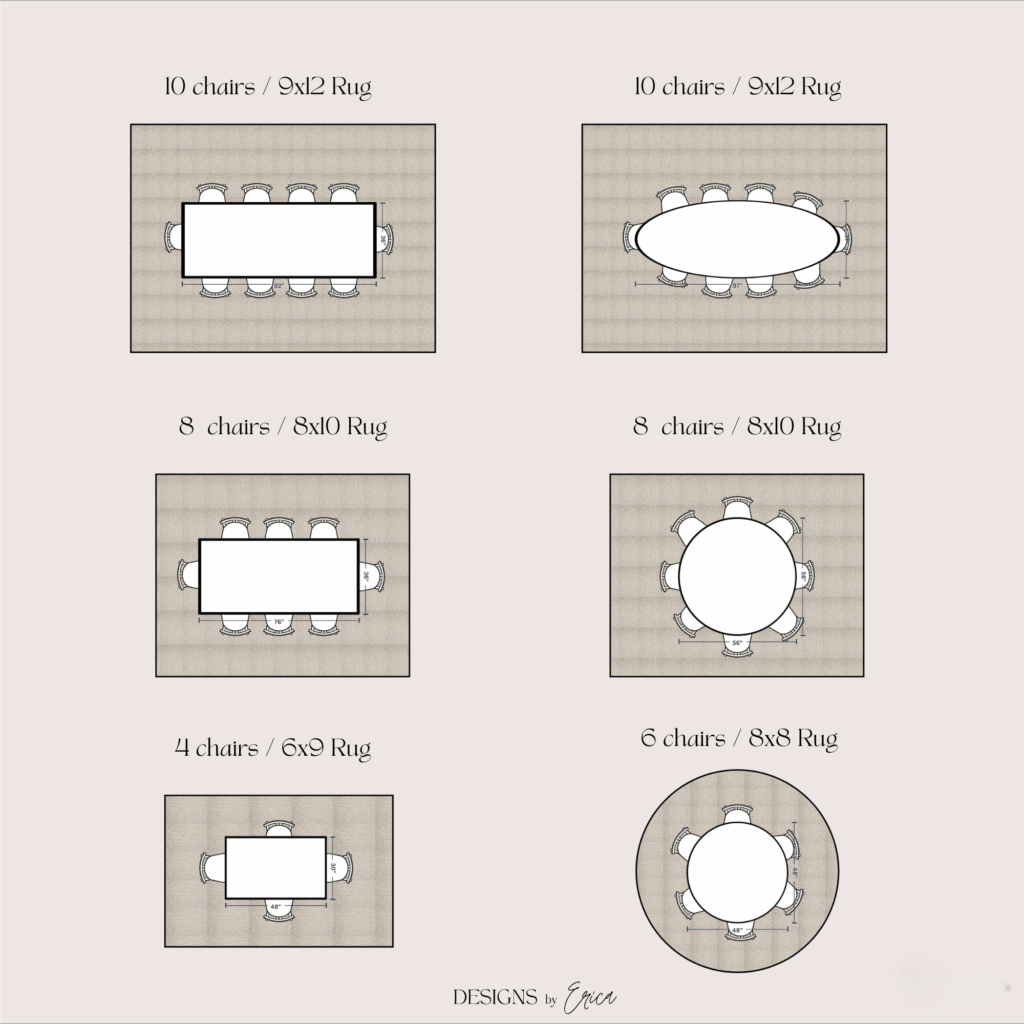
Dining rugs can be intimidating because no one wants wobbly chair legs or rugs bunched underfoot. But the rule is simple: chairs should stay on the rug — even when pulled out.
- Golden Rule: Add 24–30 inches of extra space on all sides of your table.
- Sizes to Look For:
- 4-seat table → 6×9.
- 6-seat table → 8×10.
- 8–10 seat table → 9×12+.
- Shape Tip: Round rugs look amazing under round tables and help avoid awkward rug corners sticking out.
👉 Pro Tips:
- In open-concept layouts, a dining rug visually defines the dining “zone.”
- Use a flatweave or low-pile rug for easy cleaning (no one wants to fight spaghetti stains in shag).
- For extendable dining tables, size the rug for the table when extended.
INFOGRAPHIC: For the dining room infographic, I used smaller-scale chairs that measure 15 inches wide by 15 inches deep. I also left the table dimensions on the image so you can see how different rug sizes relate to the furniture for a realistic sense of scale. There’s still plenty of room for slightly larger chairs while keeping the same number of seats at each table.
Entryway Rugs: First Impressions Count
The entry is the first thing you (and guests) see, so the rug sets the tone.
- Golden Rule: The rug should greet, not overwhelm.
- Best Practice: Choose a runner or doormat slightly smaller than your doorway width.
- Sizes to Look For:
- Small entry → 3×5.
- Larger/long entry → 2.5×7 runner.
👉 Pro Tips:
- Layer a natural fiber rug under a decorative doormat for instant designer vibes.
- Use durable materials (jute, indoor/outdoor rugs, washable rugs).
- Keep at least 4–6 inches of space between the rug and the wall so it doesn’t feel like wall-to-wall carpet.
Hallway Rugs: Long and Centered
Hallways are narrow by design, which makes a runner the obvious choice.
- Golden Rule: Leave a few inches of visible floor on each side.
- Best Practice: Center the runner — don’t go wall-to-wall.
- Sizes to Look For:
- 2.5×7, 2.5×9, or 2.5×12 depending on hall length.
👉 Pro Tips:
- Use rug pads to prevent slipping.
- Match the rug length to your hallway but keep at least 6 inches of space from walls/doors.
- For extra-long halls, use two runners end-to-end with a small gap between them.
Office Rugs: Style Meets Function
An office rug adds comfort, but it also needs to handle rolling chairs.
- Golden Rule: Your chair should stay on the rug, even when you roll back.
- Best Practice: Leave 24–30 inches behind the chair for movement.
- Sizes to Look For:
- 5×8 minimum.
- 8×10 ideal (especially if your desk is large).
👉 Pro Tips:
- Low-pile rugs are best — chairs won’t get stuck.
- Center the rug under your desk, not just under the chair.
Nursery & Kids’ Rooms (Bonus Section)
Don’t forget the little ones! Rugs add play space, warmth, and sound absorption.
- Cribs → 5×8 rug works beautifully when placed just under the crib. If you’d like to fill the room more, treat it like a living room and place the rug so the front feet of all the furniture rest on it.
- Twin beds → 6×9 or 7×10 depending on layout.
- Play areas → round rugs are playful and forgiving.
👉 Pro Tip: Washable rugs are a must in kids’ spaces.
Quick Reference Rug Size Cheat Sheet
Here’s a handy guide to screenshot or pin:
- Living Room: 8×10 or 9×12.
- Dining Room: Table + 24–30″ on all sides.
- Bedroom: 8×10 (Queen), 9×12 (King).
- Entryway: 3×5 or 2.5×7 runner.
- Hallway: Runner sized to hall (leave borders).
- Office: 5×8 minimum, 8×10 ideal.
- Kids’ Rooms: 5×8 (crib), 6×9 (twin).
Your Rug Sizing Confidence Boost
Rug shopping doesn’t have to feel overwhelming once you know the rules for how to pick the right rug size. With this cheat sheet, you can confidently choose rugs that fit your space, ground your furniture, and make your home feel finished.
✨ Next step: Want to see my favorite rugs (that hit these sizing rules perfectly) at every budget? Shop my rug picks here.
✨ Don’t forget my favorite rug grips: These help keep corners down, and prevent tripping or sliding rugs.
And if you want to keep this handy, pin the infographics to your “Home Inspo” board or print it for your next shopping trip.


+ show Comments
- Hide Comments
add a comment